Connecticut Machine Shop
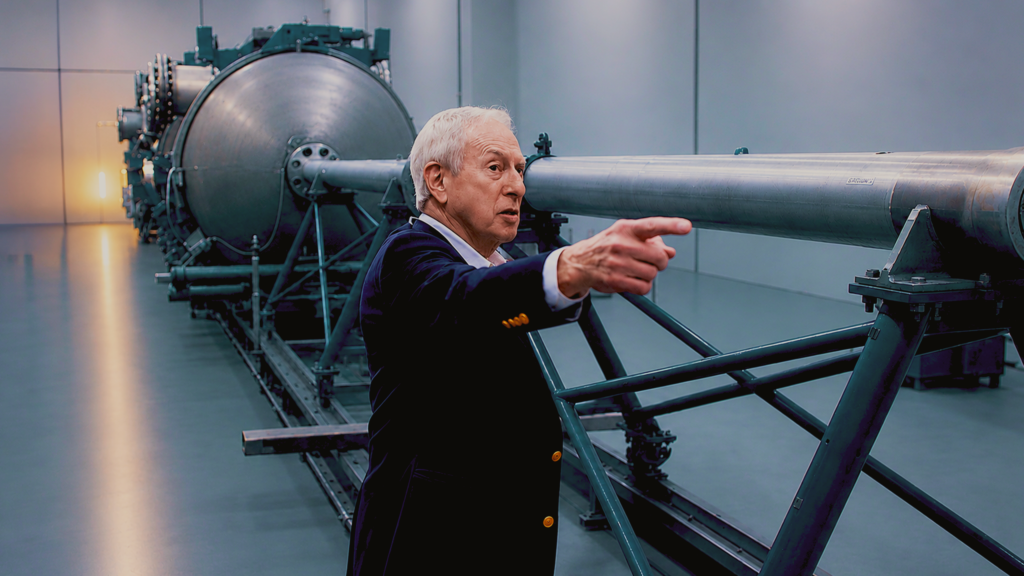
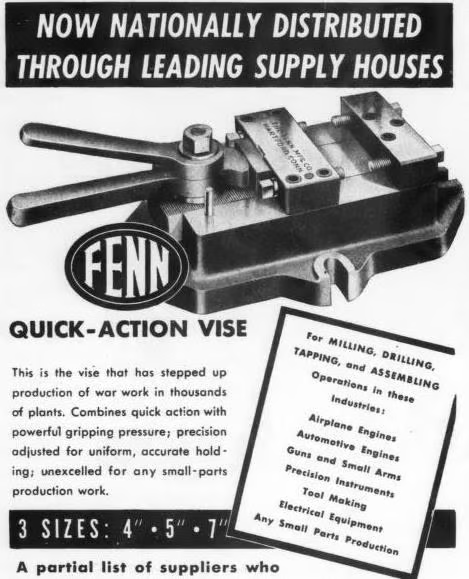
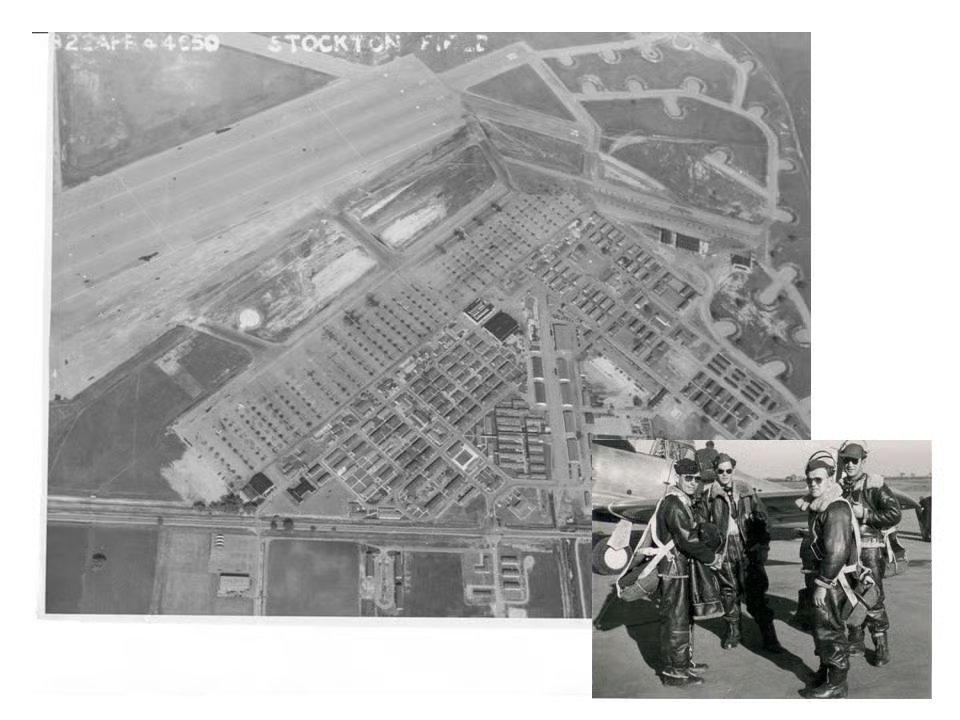
The Connecticut machine shop now known as PCX Aerosystems is older than powered flight. It opened in 1900 as Fenn Manufacturing and has supplied Sikorsky with helicopter rotorheads and transmissions since the Korean War. Last December, Greenbriar Equity combined it with Applied Aerospace, a composites shop out of Stockton, CA in business since 1954. The result: a 1,300-person, 1.3M-sqft. manufacturer of fuselage panels, flight control surfaces, solid rocket motor cases, and engine shafts for Northrop, RTX, Lockheed, BAE, Anduril, Boeing, and GE Aerospace. The business grew ~25% in 2025: four-fifths government, the rest commercial.
On Friday, the combined company — Applied Aerospace & Defense — filed for an IPO under the ticker $AADX on the NYSE.
Precisely the kind of deep-tech, dual-use supplier we keep saying needs more public-market oxygen!
So let’s talk about the long tail…
Mega-primes, LSIs, multi-$B reshoring projects, and chip darlings are great — we love them! — but we can’t forget the smaller shops, suppliers, picks-and-shovels operators, and non-prime product companies. This is “the long tail” supplying, machining, integrating, qualifying, and delivering the industrial substrate that helps underwrite American hard pursuits, deterrence, and prosperity.
And something is happening out there.
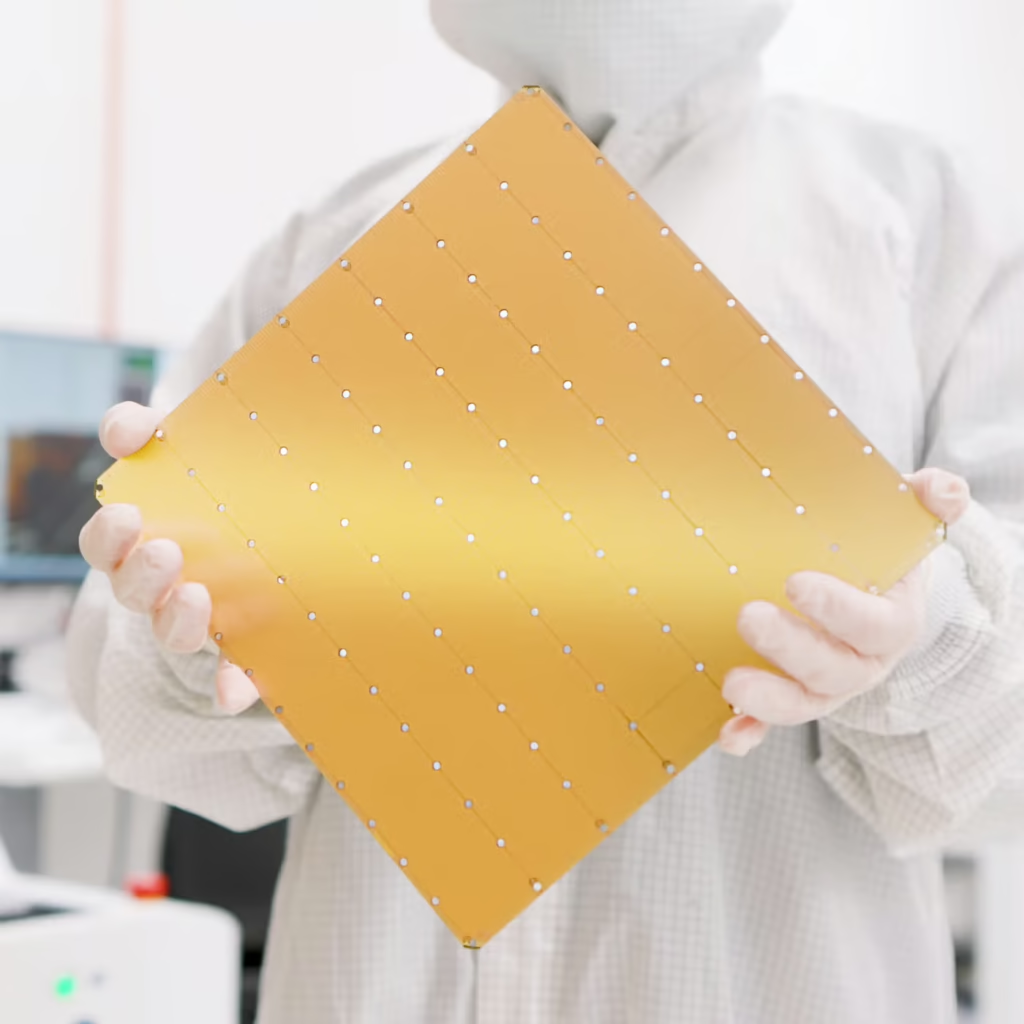


Applied Aerospace & Defense will join a wave of newly public industrials and hard tech companies clamoring to go public. AI chipmaker Cerebras, who re-filed in April, has a monster (+ massively oversubscribed) debut expected any day now. HawkEye 360 (RF geolocation from orbit) just went out last week. AEVEX, Arxis, Elmet Group, and Swarmer (the Erik Prince-affiliated Ukrainian drone AI developer) all listed within the last two months.
The new trade
We like Josh Brown’s coinage for this phenomenon: HALO — Heavy Assets, Low Obsolescence. Capital is rotating back into sectors with hard-to-replicate physical capacity and real-world moats. We call this: overdue!
Of course, we can’t talk about hard-tech IPOs without the big daddy, Space Exploration Technologies Corp. SpaceX is the platform company of platform companies, the single biggest outcome of the distribution, and an event that will set the tone for capital markets and our community (🫵 Per Aspera-pilled people, with obsessive drive and endless psyche to pursue hard things). More on that another time, because SpaceX is the head and this is about the tail: the suppliers, integrators, and assemblers making their way to public markets more quietly.
Why going public matters
Three good reasons:
- More capitalization strategies: Six months ago, we wrote that a specialty manufacturer with $150-250M in revenue, critical process know-how, and a dual-use customer base “should have the IPO path available to them.” (AADX fits this description almost too perfectly.) The venture-to-prime route is too narrow a channel for the breadth of companies the industrial base needs; IPOs could help build a wider bench of small/mid-cap industrials.
- More selective exposure: More IPOs mean investors can own specific slices of the industrial stack — not just the glossy end products or finished systems that capture the narrative premium. In the last few weeks alone, the menu has expanded to include drone subassemblies, orbital RF intelligence, and refractory metals.
- The civic, capitalist, and populist case: Microsoft IPO’d in 1986 with $140M in revenue. Amazon in 1997 with $15.7M. Almost all the wealth those companies created, they created in public — and any teacher, machinist, retiree, or 401(k) holder could ride it for thirty years. A generation of perpetual private rounds has changed that, confining wealth creation in America’s most dynamic companies to a smaller cohort of insiders, crossovers, and accredited LPs. An industrial renaissance financed entirely that way is not really one that the country owns. If the companies building America’s 21st-century MFG, compute, energy, defense, and space base are going to define the next several decades of GDP and national power, ordinary Americans ought to be able to own them!
The good news: it seems that this will soon change, with the most defining companies of our time — SpaceX, Anthropic, OpenAI — as well as more of the long tail beside them. Progress!
What do you think? Agree/disagree? Reply and let us know.