Why Hard-Tech Founders Shouldn’t Have to Chase the Whole Stack
There are a couple of things that we keep saying:
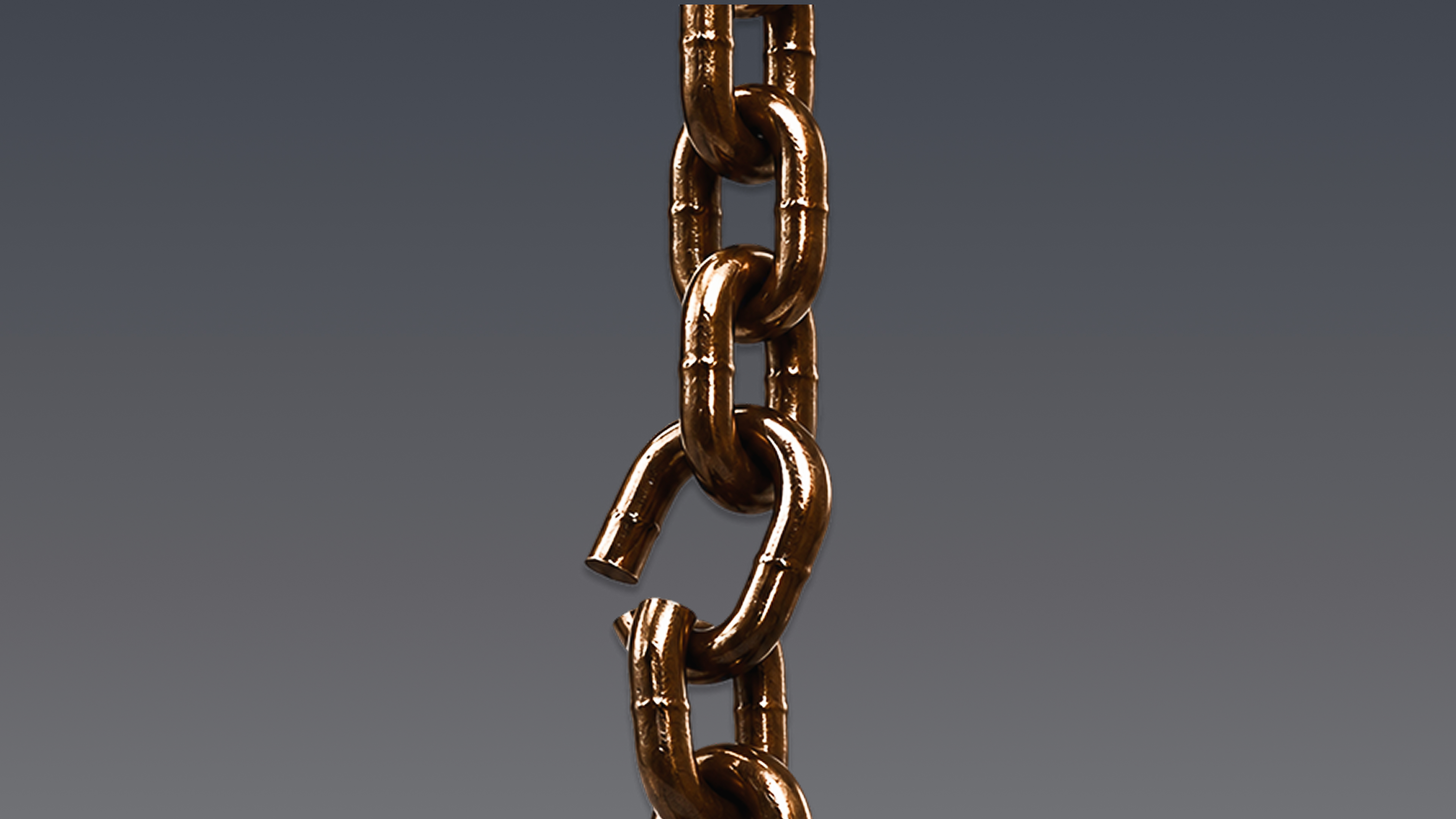
- Whether it’s a robot, chip, substation, or spacecraft, we should be able to map a critical system’s supply chain several tiers deep, down to the irreplaceable parts — and never discover that the only way to build any of these parts at scale runs through a jurisdiction that doesn’t wish you well (or, through a single, supply-constrained source)
- Capital, mindshare, policy, and talent tend to chase the tip of the spear — the most exciting things — like: frontier models, GW-class datacenters, $10B+ megaprojects, finished systems, and the like.
Put the two together and we as a community worship at the altar of maximal vertical integration, thanks to the strength of the outlier success stories: SpaceX! Tesla!
It is fine and good to want the whole stack — the integrator captures the narrative, hearts and minds, margins, and multiples. But should a founder have to be full-stack in order to succeed?
Today, in an informal essay, we get into a trend that’s got us very excited: the merchant base is reconstituting. Inside: the hero’s journey of a vertically integrated maximalist, the trials and tribulations of the long tail, and the new wave of startups (Westmag, Heron Power, Stone Power, Arcturus, Molten Industries, etc.) building actuators, motors, turbines, piece-parts, and upstream precursors that go into everyone else’s beautiful machines.
Backward & Forward: An Alternate Telling
If you ask the high priests of vertical integration — the organizations who did it right — what they’ll tell you is that they’ve succeeded in spite of it.
Here is the journey of the canonical company in this category, lightly compressed:
The Russians will not sell me the ICBM engines they promised, so I will build my own, and the rest of the rocket around them… Okay, now that’s done. The launch market is too thin to support my desired flight rate, so I will make my own demand and move into space applications… I am doing this megaconstellation, but everybody laughs me out of the room when I tell them I will launch 10,000+ satellites — so, fine, I will build the supply chain myself… Now nobody can make printed circuit boards at the volume I require, so I will become North America’s largest PCB manufacturer…
…and the rest, as they say, is history.
In many cases, SpaceX had to backward-integrate into parts and processes nobody else could do. (Then the grown-up company charged into forward integration, too, into demand: Starlink, space-based datacenters, etc.)
But you’ll notice that at most hops along the way, SpaceX… or Tesla… or choose your favorite vertical-integration maximalist didn’t really have a choice. Vertical integration became the American default for the outlier success stories because at every build-vs-buy fork in the road, the buy branch had been sawed off and build was the only one left.
And When the Buy Branch Exists?
Where a dense, trusted, technically competent merchant layer exists, founders get to focus. A merchant supplier sells to all comers, while captive shops feed the few or just one owner. One of the defining firms of our time, and the most valuable company in the world, doesn’t own a single fab! It doesn’t have to — TSMC will make anyone’s chips: Nvidia’s, Apple’s, AMD’s, yours. But where that layer is gone, every hardware company has to be a supply chain company.
The Giant Sucking Sound
As we’ve said before:
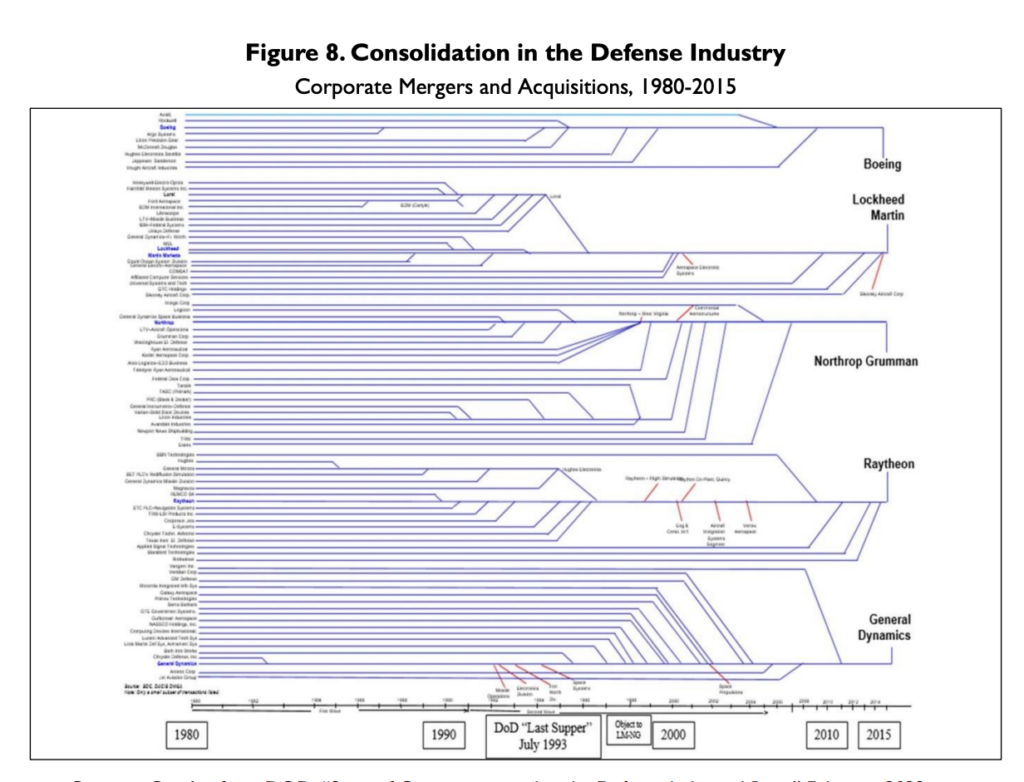
Our fixation on the tip at the expense of the base has produced a giant sucking sound: sovereign supply chains, processes, parts, and piece-parts being deprived of oxygen and pushed offshore to willing producers.
This was a sin of commission, in which we starved, sold off, or shipped overseas large swathes of our industrial substrate:, the long tail of thousands of specialty job shops, Tier 2, 3, and 4 suppliers, and sub-assemblers that constitute equally important parts of a manufacturing economy and help turn raw materials into finished systems. But this is a long tail that is capex-heavy, lower-margin, and less glamorous, so capital, talent, attention, and policy often routed around it.
The Weak Link
Today, a new species has emerged: the LLM-armed retail investor, who studies the AI supercycle obsessively and walks the value chain backward, hunting its most supply/demand-imbalanced links. This journey has taken the “bottleneck bros,” as these traders are lovingly known, from GPUs to HBM, from HBM to advanced packaging, from packaging to substrates, from substrates to the glass-and-ceramics process knowledge hiding inside obscure Japanese microcap suppliers. Joking aside, this type of retail investor has realized the same thing as our government, institutional capital, and private markets: that the highest-value part of the value chain can still come undone by its weakest, irreplaceable node.
At the same time… over the last two to three years… in group chats with investors, founders, and DC folks, you’d see the same questions keep surfacing: Who is building the actuator company? Someone really ought to build an American transformer startup — who is that someone? Who is rebuilding the conductor layer, the motor layer, the weird little piece-part layer that determines whether the beautiful machine can actually be DFM’d?
A Correction Is Underway, Thank the Heavens
We’re not here to relitigate vertical integration debates, but merely to say: founders should have a choice. And today, in far too many critical sectors, they do not. But there’s good news here, at long last…
A new generation of founders and startups are answering the call, rebuilding indispensable upstream processes and parts, piece by piece. Just look at the last few months:
- Westmag is building motors and actuators for drones and robots ($11M a16z-led seed, an order book already in the hundreds of thousands of units)
- Arcturus is making nano-infused copper and aluminum conductors ($8M seed led by Initialized)
- Heron Power, Drew Baglino’s outfit, is building solid-state grid hardware ($140M Series B, 50 GW of orders lined up)
- Arbor is turning rocket turbomachinery into 25 MW modular turbines (up to 5 GW contracted to GridMarket starting 2029)
- Stone Power is building 50 MW power turbines from a clean sheet, and just started taking reservations.
- We’ve started putting this wave on the record, too: our first Hard Reflections Q+A was with Molten Industries’ Caleb Boyd, who is cracking methane into clean hydrogen and battery-grade graphite — another irreplaceable node coming home.
These are different flavors of companies — some are merchant suppliers of parts and materials, others are equipment makers selling whole machines — but they all sell the same way: to any qualified customer.
It’s still early days, but a merchant base is reconstituting, providing more optionality for the entire system — and making it so the next great American hardware founder doesn’t have to pursue the “building everything” strategy as a precondition for success.