Storytime
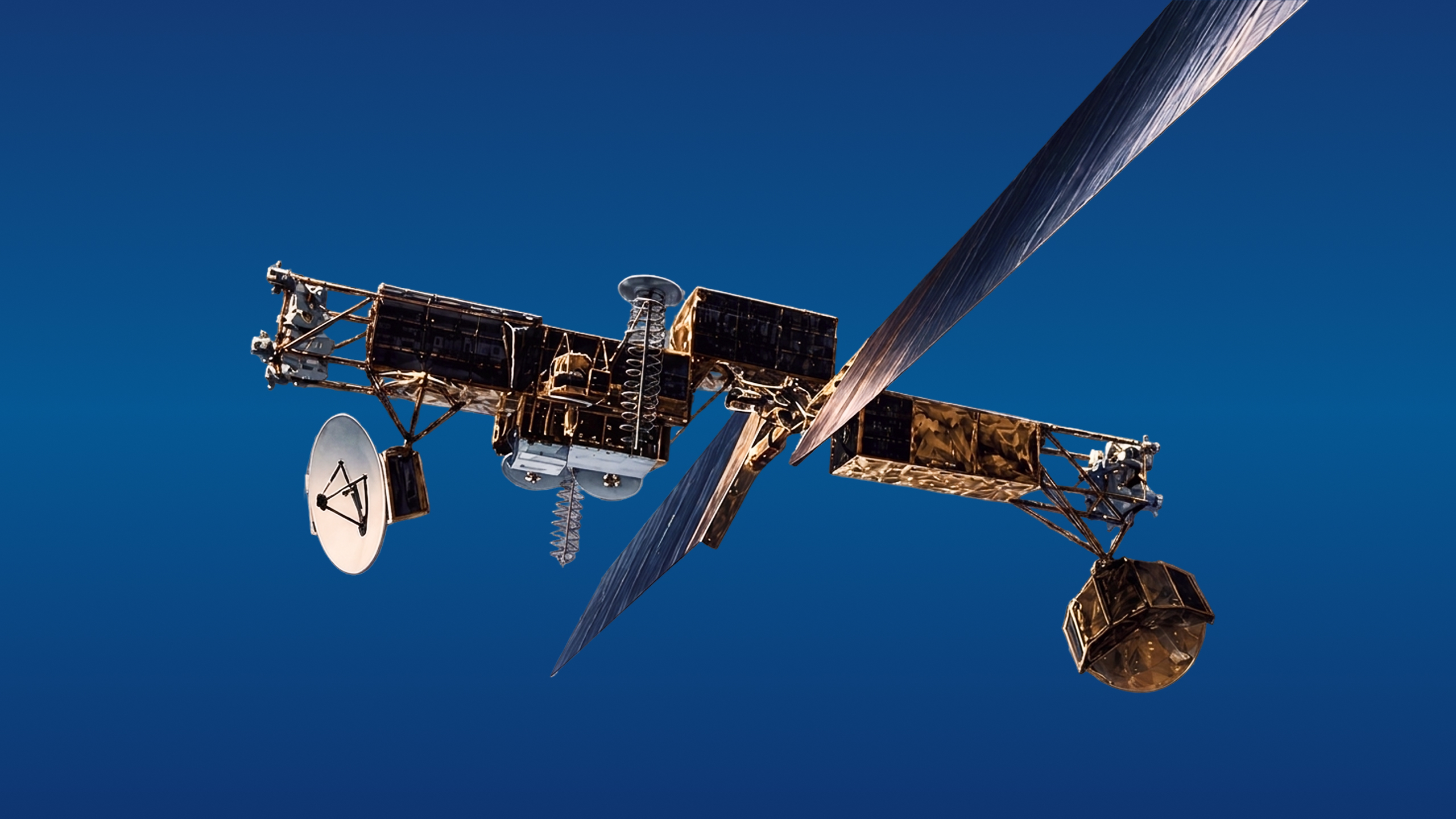
Back in the 80s, when I was a senior executive at TRW (now Northrop), I was asked to lead the design/development/production of the Milstar Antijam Communication System.
THE MISSION: Our objective for Milstar (Military Strategic and Tactical Relay) was to provide the President, Secretary of Defense, and our armed forces with a trusted and secure, jam-resistant, nuclear-survivable global communications system operating in geostationary orbit. At that time, the Soviets posed a serious threat to our nation’s survival, and reliable strategic communications were an essential part of the deterrence equation. 52 teams contributed to the effort — Lockheed, agencies, academic and corporate labs, advisors, and contractors — and we brought the orchestra together in person often, with 100+ mavericks and misfits traveling to Manhattan Beach, CA every six weeks. Within a year, we had a working system spec, and every contributor knew and owned their requirements. We were ready to make the system perform as intended! (So much of the job is conducting the orchestra!!)
ANTIJAM: Milstar’s most demanding requirement was anti-jam. We bet on a relatively new dichroic filter technology, proven by MIT Lincoln Lab, to build a lightweight, single-reflector, dual-feed antenna. The challenge was getting from a strong concept to reproducible hardware, with highly demanding performance, cost, and schedule constraints. The traditional “cut-and-try” approach was much too risky — technically and programmatically — so we instead went digital, big time.
MODEL, MEASURE, MAKE: We built simulation tools that rapidly and accurately predicted antenna patterns for specific feed geometries — which worked; converged on a design that met our needs; and then verified it in a new indoor, near-field facility instead of the slow, costly outdoor ranges of the day. It was a “digital twin,” decades before the concept would be rebranded into this term, working superbly in 1983 — so well that we extended it far beyond electromagnetic propagation. And finally, since we’re already deep down memory lane — I’ve said it before and I’ll say it again — this was when self-reliance was fully feasible. Instead of reaching for a semiconductor catalogue and buying our chip, we could draw on TRW’s own 100,000 sqft. experimental fab to produce the CMOS and gallium arsenide devices our designs demanded.
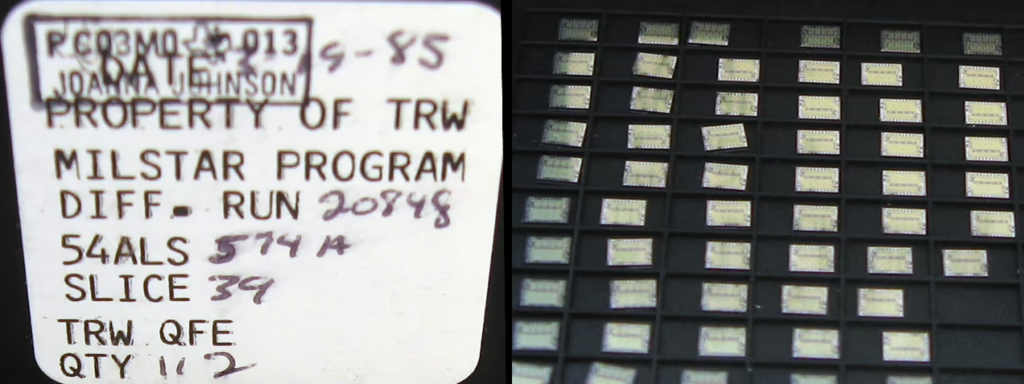
If we wished to enter uncharted territory in seeking devices with as yet available performance characteristics, the TRW fab (hey, in fact sounds close to: Terafab 🙂) was generally up to the challenge. On numerous occasions, I would literally design a spacecraft system from the semiconductor up to gain an edge.
Try that feat in today’s “fabless manufacturing” culture. If we choose to use the same chips available to our enemies and competitors, will we continue to be truly ahead? We run the risk of falling into the center of the pack!
Our team produced 6 satellites. 5 made it to orbit — sadly, one was lost because of an upper-stage failure during launch (sound familiar?).
‘THE SAVIOR MACHINE’
The constellation operated flawlessly for 30 years, serving the National Command Authority and helping preserve strategic stability. I remain enormously proud of our part in it, alongside a Lockheed Martin team led by the brilliant Sam Araki and a truly talented Air Force Program Manager, Col Eric Crabtree.
Some have called Milstar the “Doomsday Machine.” I call it the Savior Machine, because an adversary who knows America has it will think twice before doing anything strategically foolish.
Today, a new generation of EHF birds carry that mission forward. And to all of you helping ordinary Americans like my wife and me sleep safely at night — I salute you. 🇺🇸🇺🇸🇺🇸