Revisiting friction stir welding
I never thought we’d get such an active response from you all on the Friction Stir Welding piece we did — on how it saved the ISS. So I want to share a vignette from the other side of the ledger: a time FSW failed me, and why that failure is just as relevant for you all today.
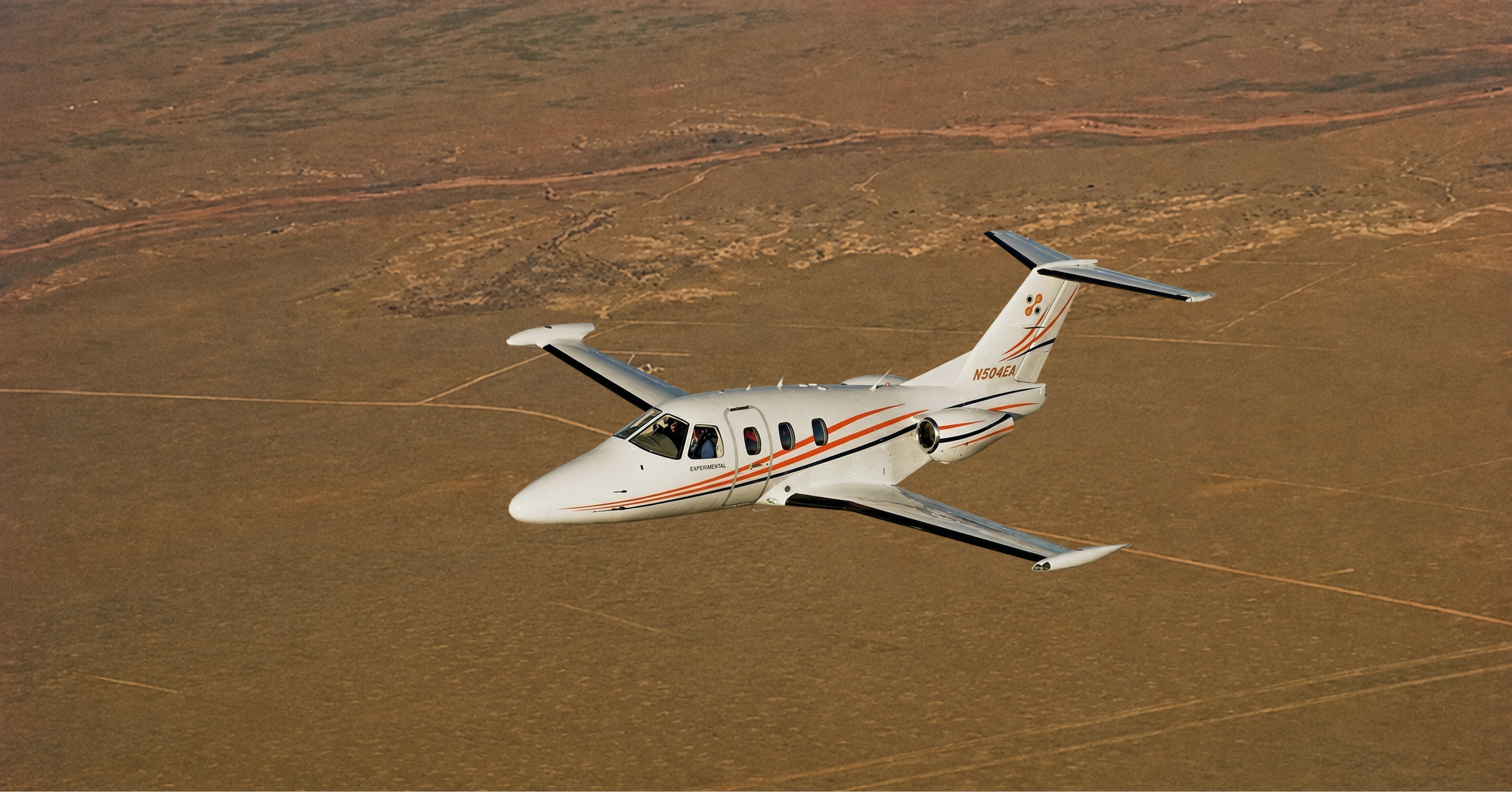
The program was Eclipse Aviation. Vern Raburn — Microsoft’s 18th employee, a pilot, and a true believer — set out in the late 1990s to build a twin-engine jet for under $1M, against the $15-20M business jets of the day.

The key nut to crack was the engine.
Through NASA’s General Aviation Propulsion program, we put ~$39M behind Sam Williams (founder of Williams International and essentially inventor of the small gas turbine engine) to build the FJX-2, commercialized as the EJ22, the lightest, most efficient small jet engine ever built. Lightest is the operative word: that engine was sized for a featherweight airplane, and we at NASA worked with Vern on exactly that: an ultralight graphite-composite airframe to match.
Composite shell + tiny engine = <$1M price tag. Or, at least, that was the working theory.
The EJ22, by the numbers:
- ~$39M of NASA General Aviation Propulsion funding behind Williams International
- ~85 lb dry weight, ~770 lbf thrust → a thrust-to-weight ratio approaching 10:1
- 14-inch fan diameter; the highest thrust-to-weight ratio of any commercial turbofan then in existence
- Engineered for an airframe in the ~4,600-lb class — there was no weight budget to give back
Then Vern changed the airframe.
After the technology was built and the contracts were awarded, he abandoned the graphite composite and went to an all-aluminum body joined by friction stir welding. On the factory floor it was the easier, faster, more manufacturable choice — but therein lay the trap, because it added weight. A lot of it.
The domino effect
The heavier the airplane got, the more inadequate that beautiful little engine became — the engine we’d spent $39M and years of NASA work to make the lightest in the world. Vern had to rip it out and bolt on a heavier, thirstier Pratt & Whitney. The new engine broke the price. By the first flights it was plain that the cheap, light, transformative jet was gone. The company went bankrupt. DayJet — the air-taxi operation my old NASA strategist Bruce Holmes brilliant engineer and strategist who left the agency to help build — went down with it.
So why was FSW the saving grace for the ISS’s tank, and a torpedo for the jet?
Because on the space station, friction stir welding served the objective. The mission demanded the lightest possible tank, the only alloy light enough couldn’t be joined any other way, and FSW was the bridge to the material the objective required. We chose what the goal needed and bent the process to fit it.
- The orbit we agreed to with Russia (51.6°) cost the Shuttle ~11,000 lb of payload per flight — weight we had to claw back out of the tank
- The alloy that got us there, aluminum-lithium 2195, is ~30% stronger and ~5% less dense than the old 2219 — and holds at cryogenic temperatures down to −423°F
- But 2195 cannot be fusion-welded reliably: an arc melts it and you get hot cracking and porosity
- FSW is solid-state — it stirs the joint together below the melting point, so those defects never form
- ~700 linear feet of friction stir weld per tank; flown 100+ times with zero FSW-related failures
On the Eclipse, the move to FSW betrayed the objective. The manufacturer chose the process that was easiest to build, and let the mission — light, cheap, integrated — collapse to accommodate it.
One time it was chosen in service of the goal; the other time the goal was sacrificed to it.
The design forks of today
You can watch the same design forks in the road today.
When SpaceX began Starship, the plan was carbon-fiber composite, the lightweight gospel. Then Elon Musk threw it out for stainless steel — heavier per square foot, “old-school metal,” and the industry howled that he’d gone backward.
But it served the objective — cheap, reusable, buildable at rate — and SpaceX re-architected the entire vehicle around that logic.
The trade SpaceX made — and why it was right:
- Cost: stainless steel ~$3/kg vs. carbon fiber that runs nearer ~$200/kg usable once you account for ~35% scrap
- Heat: steel takes ~1,500–1,600°F reentry heat; composite degrades past ~300–400°F
- Build & repair: steel is welded by ordinary tank hands and patched with a hammer; composite needs autoclaves and specialists
- Cryo bonus: the proprietary stainless (301 → 304L–class) actually gets stronger at propellant temperatures
- The penalty was raw weight — but once you account for the heat-shield mass a composite would need, the steel ship can come out lighter at the system level
That is the move Vern had in front of him and got backward. SpaceX changed the material and re-derived the mission around it. Eclipse changed the material and kept pretending the old mission still worked.
I’m sure we all have plenty more examples in both camps.
The moral of the story: manufacturing method and mission are the same decision. Brilliant people with great intent can lose sight of the end objective. Don’t let this be you!