
The Pentagon put it in writing
ManTech opened in 1956 to fund new ways of making things rather than the things themselves. On Aug. 10, it had a 70th birthday party at the Pentagon, where Under Secretary Emil Michael called ManTech “the unseen force” behind precision-guided munitions, stealth aircraft, and advanced microelectronics.
Seven weeks later, ManTech published its plan for the next five years. The office did not soften its view, writing on Page 4: “Today, we lack the latent capacity to rapidly scale production of key systems and munitions in a crisis… Our inability to surge production is a known vulnerability that invites aggression.”
- Munitions & missiles are perhaps where the production pain is most publicly visible today, given the Iran campaign’s drawdown of prewar stocks in key categories.
- But we face plenty of other acute production challenges: the plan names castings, forgings, and microelectronics as single points of failure (SPOFs, as our friends @ Overmatch call ‘em).
The Pentagon’s new defense manufacturing plan recognizes a fundamental truth: military superiority is tied to production capacity. America can deter and defend against military conflicts by creating and producing the world’s most modern offensive and defensive weapons systems. The key is rebuilding our industrial capacity to manufacture faster, better, cheaper, and at overwhelming scale.

How did we get here?
Well how much time do you have? The plan identifies three habits from the long peace — the ‘end of history’ that never arrived:
- Just-in-time. Under this paradigm, inventory becomes a sin. “Slack” is a cost center to be engineered out of the system, but that same slack is what you call on in a time of crisis (or extreme demand) to surge.
- Consolidation. At the Last Supper in 1993, the Pentagon famously told its primes: merge, or die.
- Offshoring. “Critical production” is as specific as the plan gets about what left, and “abroad” is as specific as it gets about where it went. We can fill in between the lines: the ‘schlep’ work (dirty, low-margin, capital-heavy) followed the lowest bid out of the country first, but as went foundries, so too did forge shops, then fabs, and more.
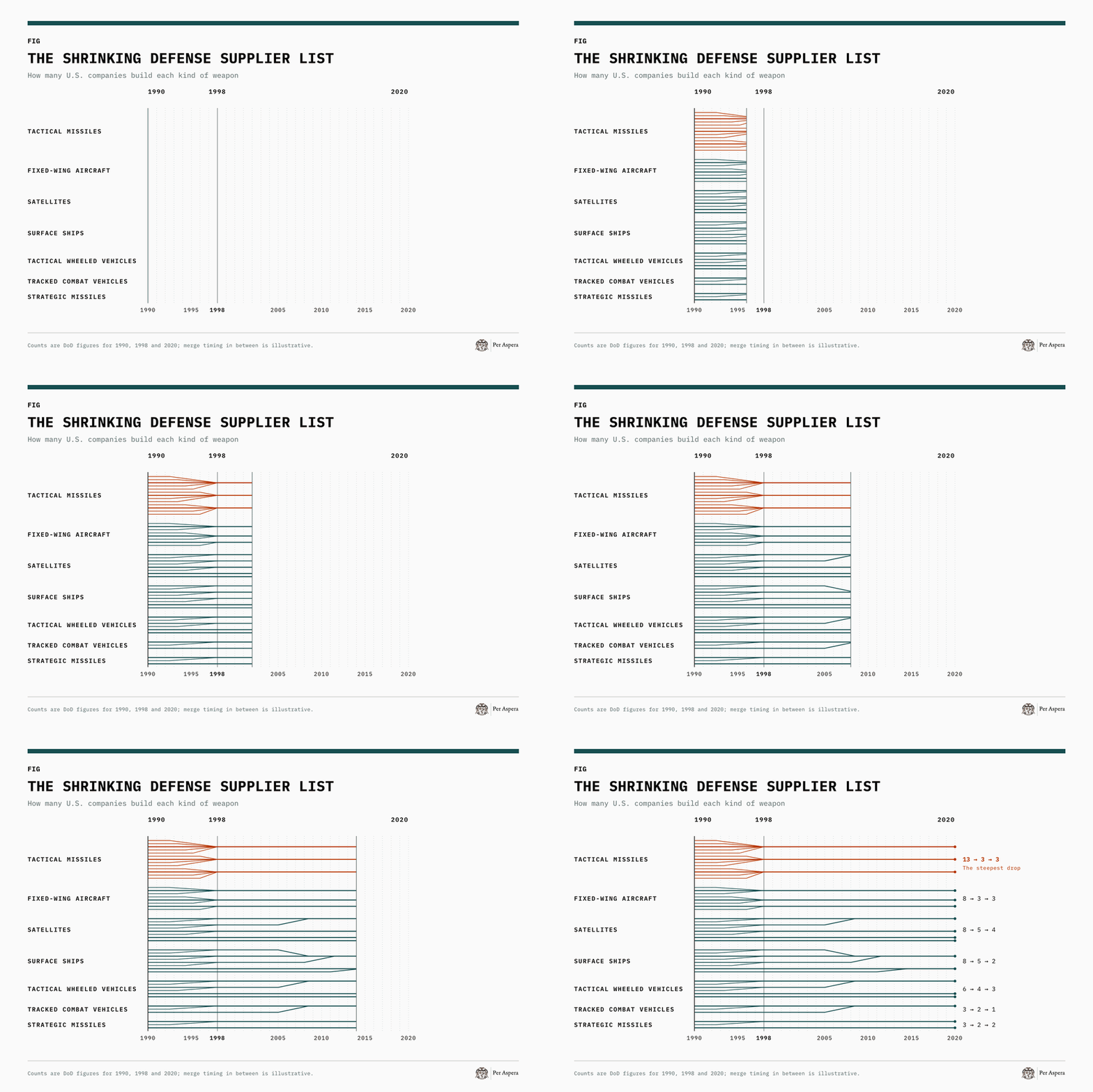
When the Pentagon doubles an order, nothing much happens at first. Spinning up qualified tooling, spare machines, trained operators, and a second source can take years. It can feel brutally slow to the new “deep tech” investors who have joined our ranks in search of a durable investment thesis, but are acclimated to the breakneck rate of change in AI SI capabilities.
ManTech’s answer to this “brittle” system is to distribute the work: spread production to a deeper bench of suppliers, and lean on additive manufacturing, robotics, cold-spray repair, so no single plant can stall a program.
Same part, every time
There’s always a catch, and ManTech takes this one on candidly: a qualified part is a qualified process. If you change the machine, or the foundry’s cooling rate, you have a different part until testing says otherwise. In defense that means first-article inspection and “a burdensome cycle of extensive physical testing for every minor change.” This is why a second source can take years, and why an item manager can’t currently send a design to a certified cell at a depot and get a flight part back. ManTech’s proposed fix is to put the instruments inside the machine (in-situ monitoring, CT inspection) and maintain a “digital thread” tying how a part was made to how it performs, allowing qualification to run on data, targeted tests, and tight feedback loops.
All roads lead to a valley…
This takes us to the all-too-familiar standoff that prevails in the gap between research funding and a production contract. Investors want to see a customer; the customer wants to see a mature, de-risked product. The companies caught in between will often abandon good technology or exit to bigger players, producing a DIB “smaller, less competitive, and slower to respond than the national security environment demands.”
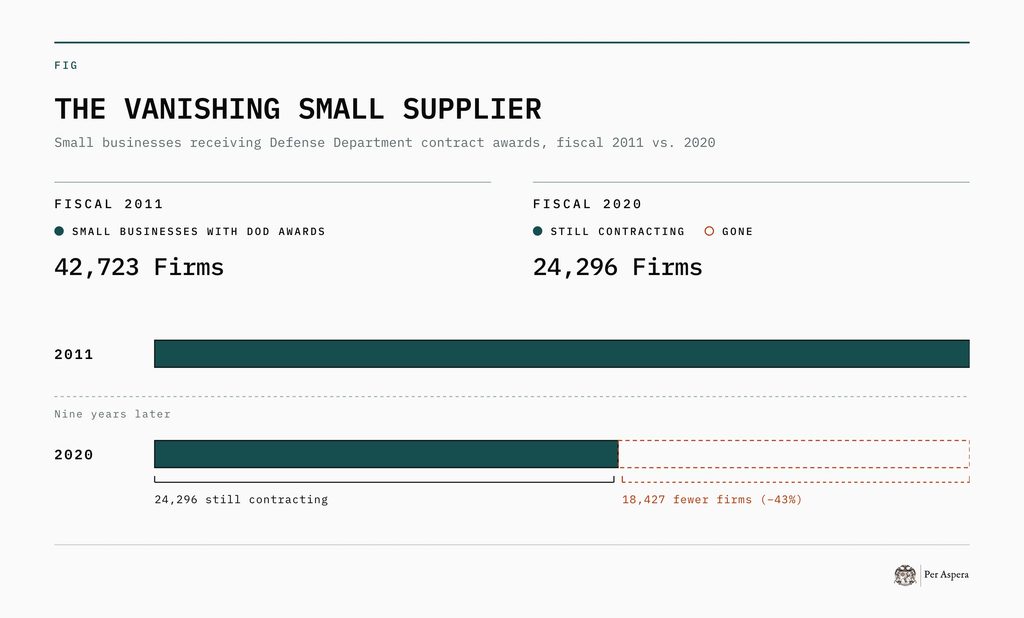
This is the all-too-(in)famous “Valley of Death,” which the plan has rebranded the “transition corridor.” ManTech can fund pilots and de-risk a process, but knows its limit, and draws that line: “this strategy tackles the challenge from a manufacturing technological standpoint.” The POs that end the standoff have to come from the acquisition system. And, to the Department’s credit, that system is being reformed and rebuilt, with haste, before our very eyes.
What we hadn’t quite figured out was a way to find out, before a war, which suppliers can actually deliver under load. On Monday the Army proposed one.