Taking Chance
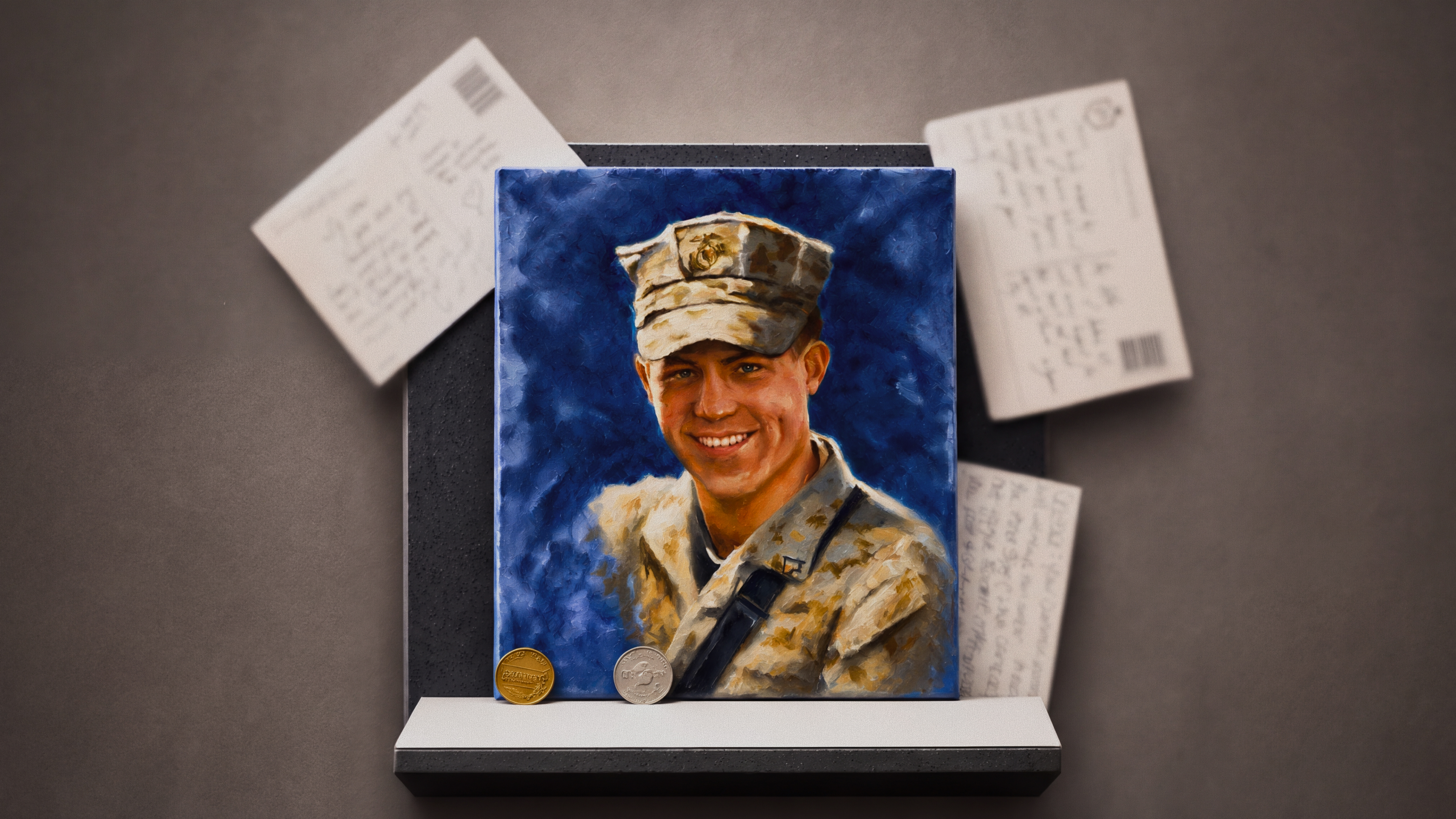
There’s a movie I still can’t talk about without getting choked up. It’s Taking Chance, the 2009 HBO film with Kevin Bacon, based on the journal of Lt. Col. Mike Strobl, the Marine officer who volunteered to escort the body of Chance Phelps, a young man from Wyoming killed in Iraq in April 2004, all the way home. At every step, Chance was treated with respect.
This Veterans Day, I’d ask us to begin with Chance, and with the families who carry the anguish of war while the world goes on. Then let’s think about the young people we will send into the next war. We are building machines that can do more and more of the fighting. That can never become an excuse to take human command out of the decision to send young soldiers into battle and potential death.
I came to that view over a lifetime.
Shaving Kits
It started on my block in the South Bronx during the Korean War. My friends’ older brothers volunteered and shipped out. We didn’t have much money, but my mother bought each boy who was leaving a modest shaving kit from the local drugstore, so he knew we cared. When their letters came, they were read aloud to us. Most of those young men came home. Some did not.
By Vietnam, war came to my family. My cousin Howie volunteered to walk point with the Green Berets. He was shot four times and exposed to Agent Orange. My Aunt Pauline flew to Hawaii four times during that war, to support her son during his R&R. By no small miracle, the thing we prayed for each evening came true: Howie made it home.
I wanted to serve, too. In 1962, my senior year at City College of New York, I volunteered for the Air Force to become a fighter pilot. The doctor started laughing during the physical. With glasses as thick as the bottom of a Coke bottle, I was too nearsighted to fly, too nearsighted for OCS, too blind, in fact, for the Air Force. So I did the next best thing. I went to NASA to help beat the Soviet Union in the space race, and later into the defense industry, building the tools our armed forces needed to protect Americans from then-belligerent actions of the Soviets.
Piss and Vinegar
My work put me on a lot of airplanes. Flying coach to California, I’d often find 30% of the plane filled with very young soldiers heading west to train for Vietnam, full of piss and vinegar. On the way home I’d fly with young men, still teenagers, home on leave or done with their service. They were not the same people who had gone out. Those flights were very quiet.
War is not like the movies. It takes a piece of people’s souls.
I never went to war myself. But I proudly built the tools of war, putting weapons in the hands of young men who put their lives on the line for all of us. I had a responsibility to them, and it didn’t end when the equipment shipped.
Today, the defense industry talks about effectiveness, efficiency, business, and AI. We need to spend more time talking and thinking about the human beings who might die or experience major damage to their bodies. And don’t get me wrong: I am not against building weapons to protect the American people, nor against sending young Americans into battle with proper review and chain of command. Our troops deserve the best tools we can give them to win. New machines may let us fight with fewer young Americans in harm’s way. Thank God for that. But we can never forget the people tied to the machines.
Three Seconds
Now AI hands us a new way to fight war and, if we are not careful, dodge responsibility: let the machine decide, for the sake of expediency or reaction time. Some in the industry argue that China will beat us if we impose controls. We damn well better have appropriate human oversight and controls on machines that assure accountability, because people may die.
An AI agent can’t be held accountable. A president can. So can a general, a captain, a private. Whenever death and destruction are involved, a human being must be held accountable. And for an act of war, no AI agent should ever disintermediate the president from a fateful decision.
Some will say decisions now have to be made in three seconds. To knock down an incoming missile, maybe so. But remember the Cuban Missile Crisis: President Kennedy spent 13 days thinking through every option before he acted. Speed matters, but so does knowing when not to act. No machine, however fast, takes that responsibility off a human being’s shoulders. I’m reminded of Admiral Hyman Rickover’s testimony before the Joint Committee on Atomic Energy on July 15, 1961:
Responsibility is a unique concept. It can only reside and inhere in a single individual. You may share it with others, but your portion is not diminished. You may delegate it, but it is still with you. You may disclaim it, but you cannot divest yourself of it. Even if you do not recognize it or admit it or its presence, you cannot escape it. If responsibility is rightfully yours, no evasion or ignorance, or passing the blame can shift the burden on someone else. Unless you can point your finger at the man who is responsible when something goes wrong, then you never had anyone responsible.
Howie is 79 now. For decades, he and his fellow patriots have raised money to send hospital equipment, wheelchairs, and school supplies to Vietnam, for people still suffering from the Agent Orange we never cleaned up, now into the third and fourth generation. War doesn’t end when the shooting stops.
This Veterans Day, let’s give thanks for the people who gave their lives, who came home wounded, or changed by what they saw. And let’s think about the veterans of the future.
A Marine brought Chance Phelps home. Whoever sends the next young American into harm’s way has to be a human being who will answer for it. Never a machine.
Have a story about a veteran in your life, or a thought on this piece? Write to Dan. He reads every note.