Every quarter
Our friends at Space Capital (a PA Founding Sponsor) boil ~10,000 funding rounds down into a report called Space IQ, and every quarter we mine it for stats that can help us sound smart at space cocktail parties. Today we’re sharing the goods from the Q3 edition, which dropped last Tuesday. Fair warning: methodologically, Space Capital takes an expansive view of the space economy, all the way up to the application layer:
- Infrastructure: hardware & software to build, launch, and operate space-based assets
- Distribution: hardware & software to connect, process, and deliver what those assets produce
- Applications: businesses that run on space-based assets but build no space hardware (so, by Space Capital’s count, Uber is a space company)
The 10 numbers that stood out:
- Of the $518.9B in private space investment since 2009, 18% landed in the first nine months of 2026.
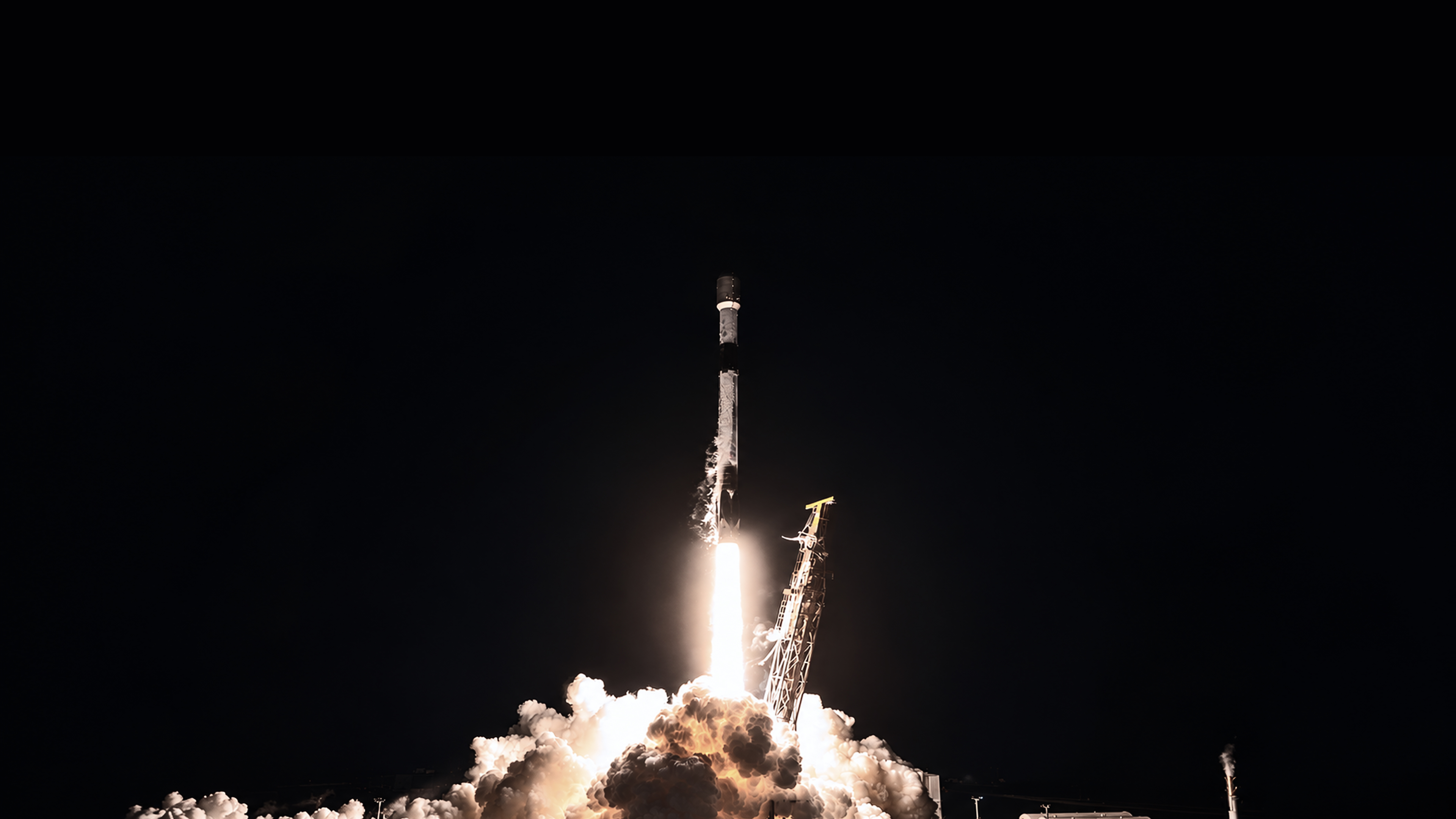
- With SpaceX not taking new F9 rideshare bookings past 2028, and the satellite crowd starting to openly fret, pure-play launch startups have raised a record $7.8B this year (led by Stoke’s $1B Series E). Rockets reached orbit or landed boosters on three continents in one quarter (with China netting a Long March 10B booster at sea, Zhuque-3 sticking a landing, India’s Skyroot making orbit, and Isar flying from Norway).
- Q3’s biggest infrastructure check, $1.4B, went to Hadrian. Manufacturing and components companies have raised $8.0B this year, more than double any prior year.
- Golden Dome’s FY27 request stands at $17.5B, while the share funded in base authority under the CR is <$400M. Space Capital has a useful coda here: “Underwrite the requirement, not the appropriation.”
- What we’ve felt for some time is showing up in the numbers: a renewed, continent-wide push for European space sovereignty. European startups had their best fundraising quarter on record, taking 28% of global space dollars (Europe’s highest share since 2019), led by Helsing’s $1.8B Series E.
- Next stop for the IPO window: Shanghai??? Over in China, 10+ commercial space firms are lining up to list (at least five are launch providers).
- Since Isaacman’s NASA pivoted from Gateway to a $20B permanent Moon Base, lunar investment has hit its highest level since 2021.
- Buyers are busy, and stingy. Acquirers have spent $17.4B across 92 space deals this year at a median valuation step-up of 2.0x, down from 2.8x in 2021.
- Space infrastructure startups’ survival odds are, maybe counterintuitively, slightly better than the rest of the pack:
- Of 752 space infrastructure startups seeded since 2009, 51% reached Series A, 15% Series C, and 3.1% Series E.
- A CB Insights study of 1,098 tech startups seeded in 2008–10 found 46%, 14%, and 2%.
- And the outlier to end all outliers: SpaceX went public at roughly 171x the capital it raised. For comparison, Uber managed 5.5x at its 2019 IPO, Airbnb ~7x, Snowflake ~24x and Zoom, the poster child for capital efficiency, ~63x. Remember when hardware was supposed to be the capital-intensive category?
For more, check out Space Capital’s full report here & watch the Space IQ Briefing at Nasdaq.
Ryan Duffy is the Editor-in-Chief of Per Aspera.